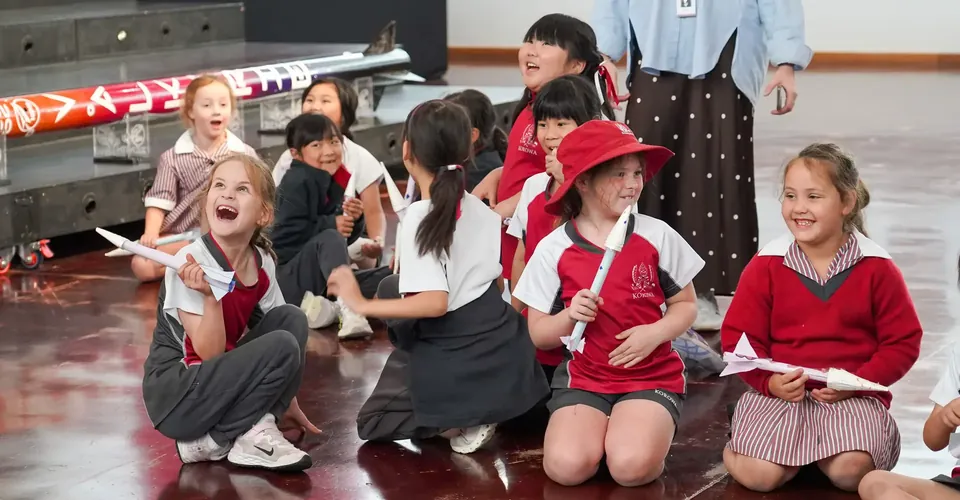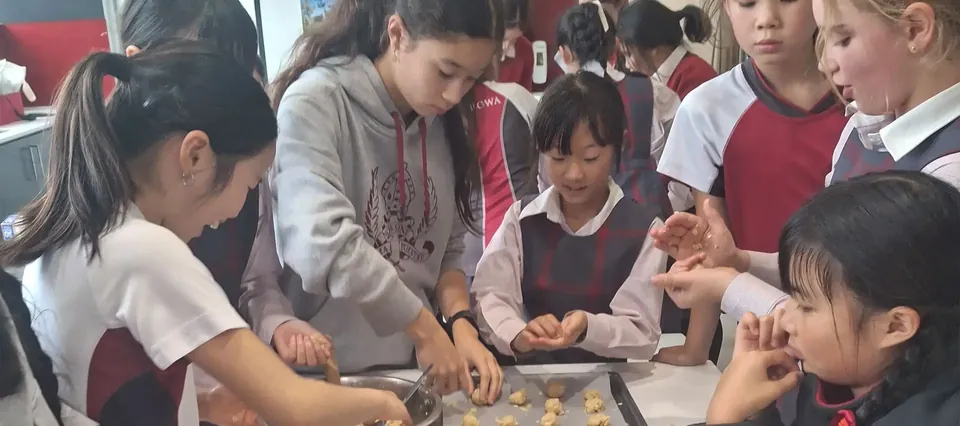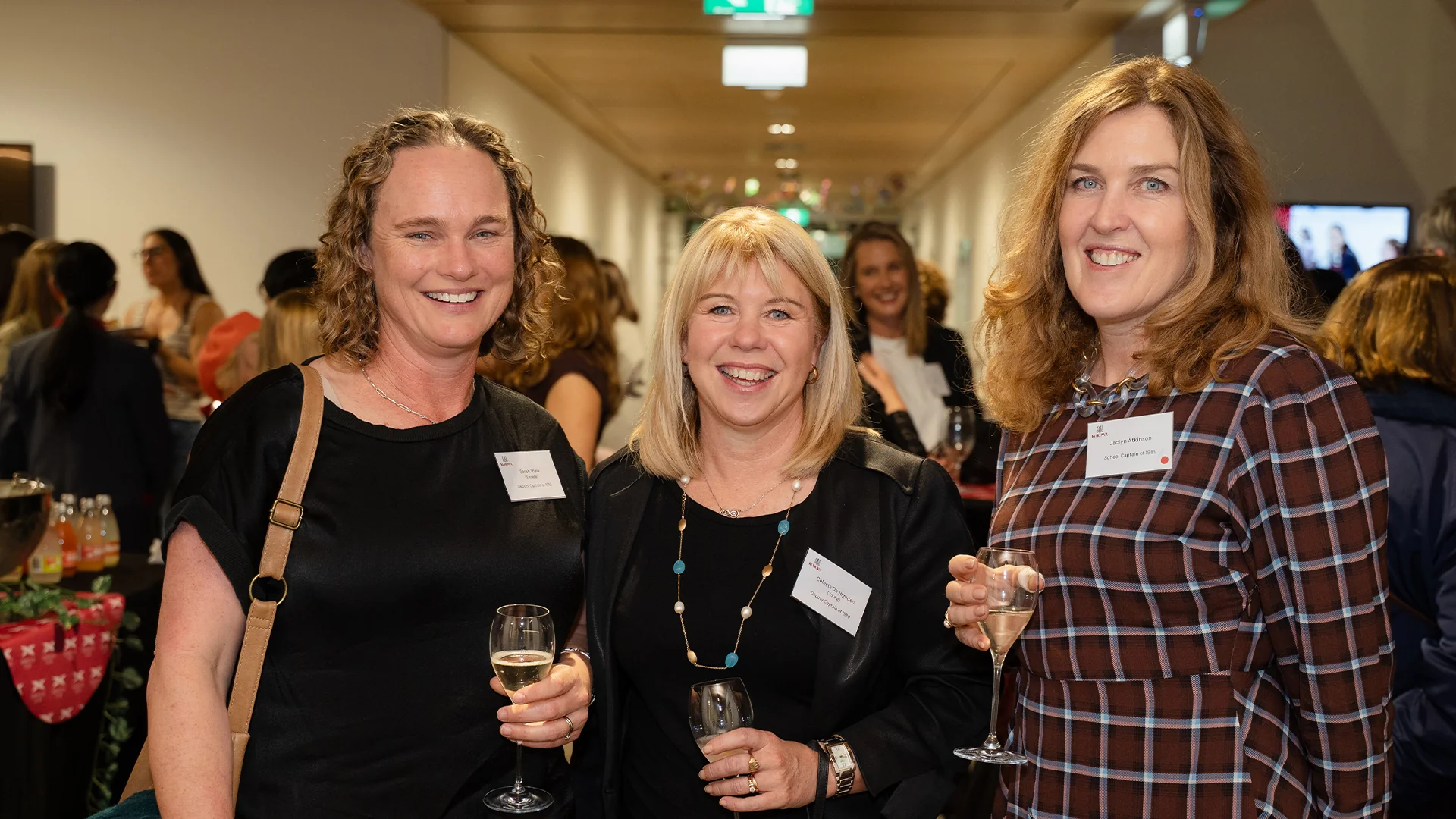
National Science Week marked the launch of the inaugural Korowa STEM Festival, a week-long program for students from ELC to Year 12.
The Festival reflects Korowa’s approach to STEM education: building curiosity from the earliest years, developing knowledge and skills as students progress through school, and creating opportunities for students to explore the many pathways STEM can offer.
Building early science skills through wildlife
For students in ELC, Prep, and Year 1, the Festival began with a visit from Wild Action and an introduction to a collection of native Australian animals.
Students explored animal adaptations, habitats, diets, lifecycles, and conservation, and learnt how different species survive and interact with their environments. They also had the opportunity to touch and hold several animals, allowing them to examine characteristics they had been discussing.
For our youngest students, experiences like this build the foundations of scientific thinking. By observing, asking questions, comparing what they see, and investigating the natural world, students begin developing the curiosity and inquiry skills that underpin STEM learning throughout their education.
Developing coding and robotics skills in Junior School
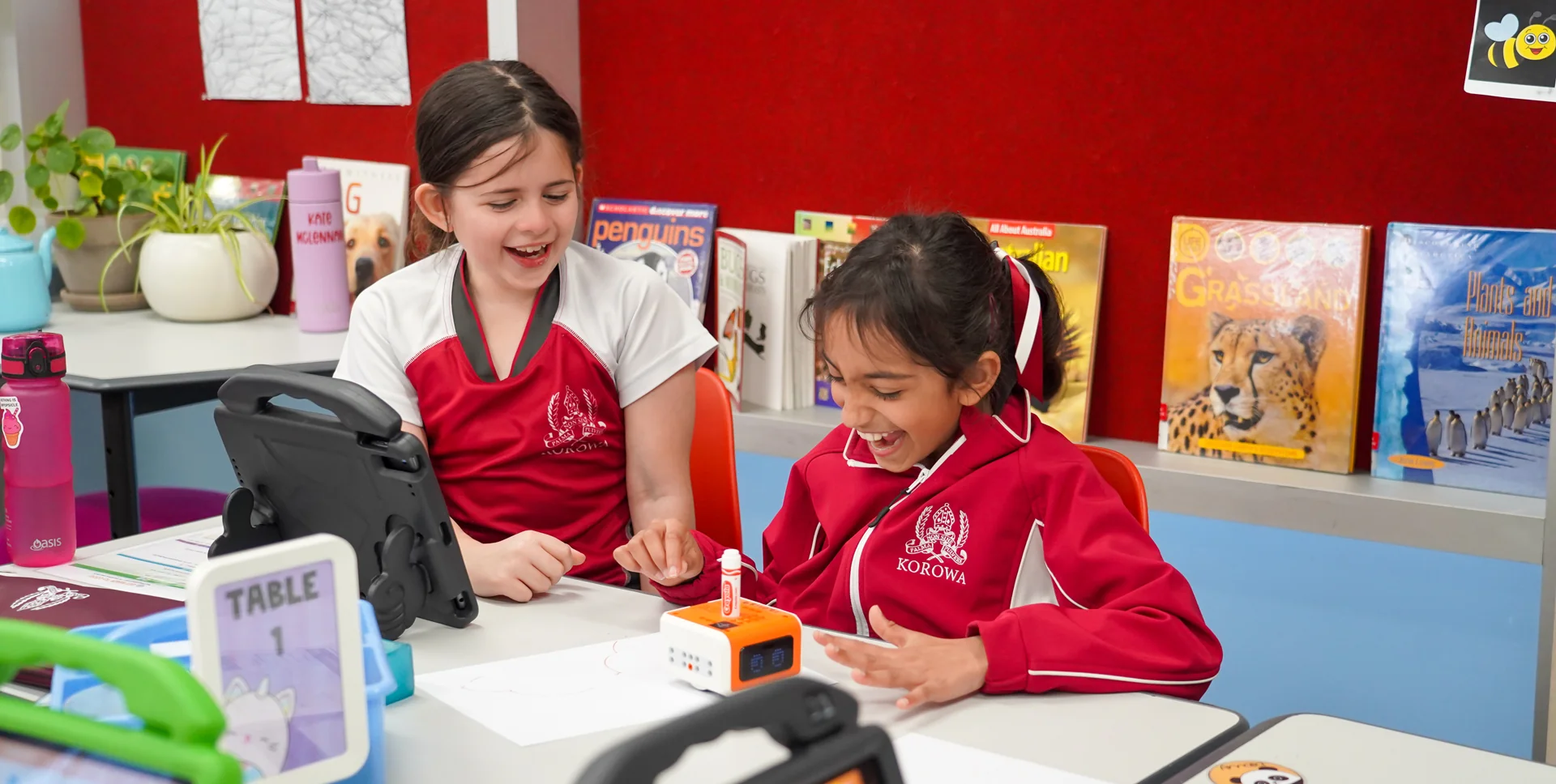
Students in Years 2, 3, and 4 participated in robotics and coding workshops delivered by ThinkerLab.
Working collaboratively, students programmed robots using block-based coding and explored sequencing, logic, sensors, and movement. A series of challenges required them to test their programs, identify problems, adjust, and try again.
Alongside developing computational thinking and coding skills, students learnt how technology can be used to turn an idea into a working solution. They were encouraged to experiment, learn from what didn’t work, and collaborate to solve problems.
Connecting with CSIRO scientists on the Great BarrierReef
Students in Years 5 and 6 had a rare opportunity to speak directly with scientists aboard CSIRO’s research vessel, RV Investigator, while they were undertaking research on the Great Barrier Reef.
During the livestream, students learnt how researchers map and investigate the seafloor, explored the technology used in contemporary marine science, and discovered what it is like to live and work aboard a scientific research vessel.
Students could respond to questions from the scientists and ask questions of their own. This gave them direct access to people working inSTEM and the opportunity to understand not only what scientists study, but how scientific research is conducted and the role it plays in understanding and protecting our natural environments.
Supporting girls to explore careers in STEM
A significant part of the Festival focused on introducing students to women working across different STEM fields and giving them the opportunity to learn about where STEM studies can lead.
At the Senior School National Science Week Assembly, astrophysicist Dr Rebecca Davies spoke about her career and experiences as a woman in STEM. She shared the role that curiosity, perseverance, and passion have played in her work and gave students insight into a career in scientific research.
Students also attended a guest lecture from Associate Professor Fae Marzbanrad from Monash University’s Faculty of Engineering.Associate Professor Marzbanrad discussed her work in biomedical engineering and how engineering can be applied to improve health outcomes and transform lives.
Meeting women working in fields such as astrophysics and biomedical engineering gives students a clearer understanding of the breadth ofSTEM careers available to them. It also allows students to hear directly about the study, decisions, challenges, and opportunities involved in pursuing these fields.
Exploring marine science beyond the classroom
Year 8 and Year 11 students extended their science learning through guided educational experiences at SEA LIFE Melbourne Aquarium.
Students investigated marine ecosystems, biodiversity, and conservation challenges, considering the importance of protecting ocean environments and the role science plays in understanding environmental change.
Through this excursion, students connected concepts studied at school with the environments, organisms, and issues they were learning about, giving greater context to their studies.
Connecting our school community through the Seeds ofScience
This year’s National Science Week theme, Seeds of Science, also provided an opportunity to bring students of different ages together.
Students from Prep to Year 12 worked with their buddies to plant daffodil bulbs across the Korowa campus. Alongside exploring growth, plant biology, and environmental stewardship, the activity strengthened connections between younger and older students.
When the daffodils bloom, students will be able to look across the campus and see a lasting contribution they made together to the Korowa gardens.
STEM education from ELC to Year 12 at Korowa
The inaugural Korowa STEM Festival brought together opportunities for ELC through Junior School and Senior School, to build scientific knowledge, develop skills in technology and engineering, investigate questions, solve problems, and explore where their interests could take them.
By introducing students to STEM concepts early and continuing to broaden their experiences as they progress through school, Korowa gives students the knowledge, confidence, and opportunities to consider STEM not only as an area of study, but as a pathway they may choose to pursue.