Junior School

Prep to Year 6
Learning Takes Root
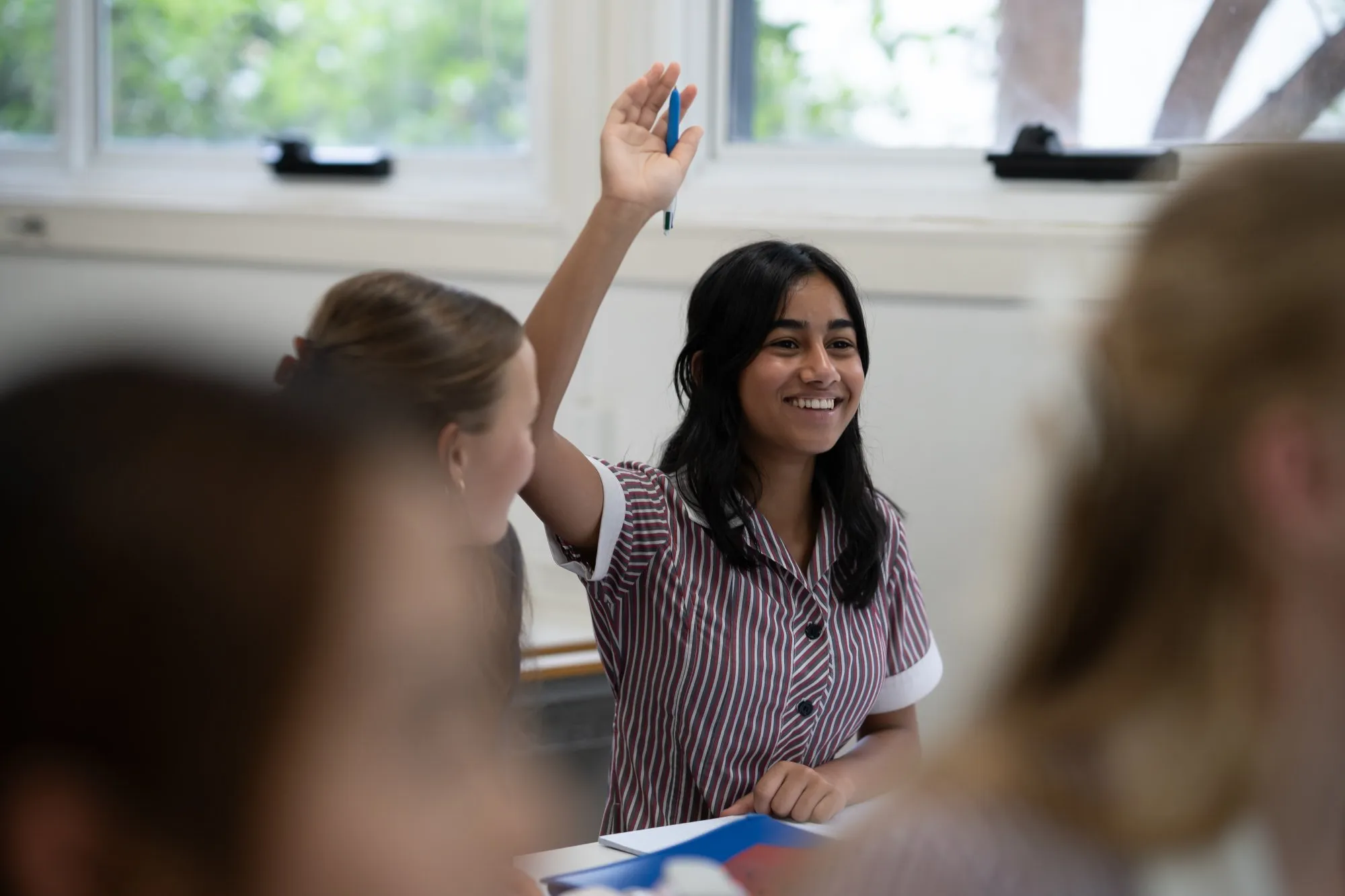
Junior School is where your daughter’s love of learning truly begins. These early years lay the foundation for confidence, curiosity, resilience and character. With a personalised approach and a strong sense of community, Korowa ensures every girl is seen, known and nurtured as she grows into a courageous, compassionate and capable young person.
Where Girls Flourish
The mission of the Junior School is simple: to provide the best possible learning environment, where girls flourish and feel respected.
We want every girl to develop the confidence, resilience and growth mindset that allow her to become her best self. Our values of courage, curiosity and integrity are embedded into everyday learning and interactions, guiding students to make compassionate choices and build strong relationships.
.webp)
A Close-Knit Community
Our close-knit community is one of our greatest strengths. Our teachers know each child deeply, and our families value the connection and partnership that supports their daughter’s learning journey. Initiatives such as our subsidised school-bus services demonstrate our ongoing commitment to family support.
We would be thrilled to welcome you and your family to see and experience Korowa's Junior School for yourself. Simply click "Book a Tour" below to make a time to visit.
.webp)
Intentionally Structured
The journey from Prep to Year 6
Your child's learning journey is intentionally structured through three developmental phases.
Each stage builds on the previous one, supporting her academic growth, social-emotional development and emerging sense of identity.
Prep to Year 2
Prep to Year 2
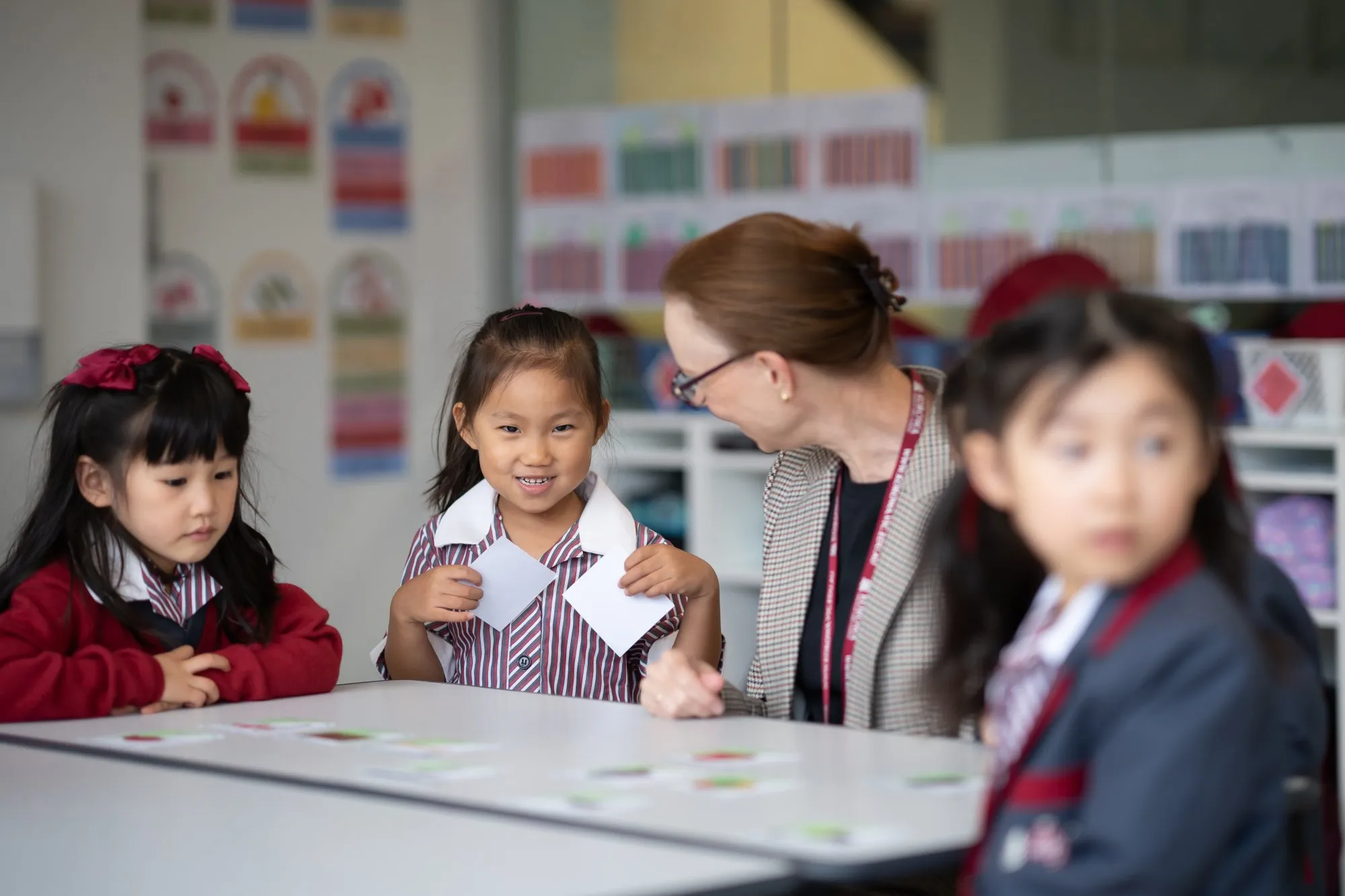
The early learning years mark a time in which your child is establishing herself as a learner while developing independence and resilience. A love of learning is nurtured, and strong friendships and bonds with peers and teachers develop. Students are encouraged to take risks with their learning while setting and achieving personalised goals.
The early years are a time of transitioning to school, where students are developing in the areas of: curiosity, cooperation, confidence, creativity, commitment, enthusiasm, persistence, imagination and reflexivity.
Children are exploring a range of skills and processes, such as problem-solving, enquiry, experimentation, hypothesising, researching and investigating. And your child is beginning to understand how they can transfer and adapt what they have learnt in one learning experience to another.
Korowa's many varied learning experiences will ignite a passion for learning as your child connects with people, places, technologies and the use of natural and processed materials. This is a time when students are developing who they are as they learn to share, take-turns, collaborate and develop relationships.
Years 3 and 4
Years 3 and 4
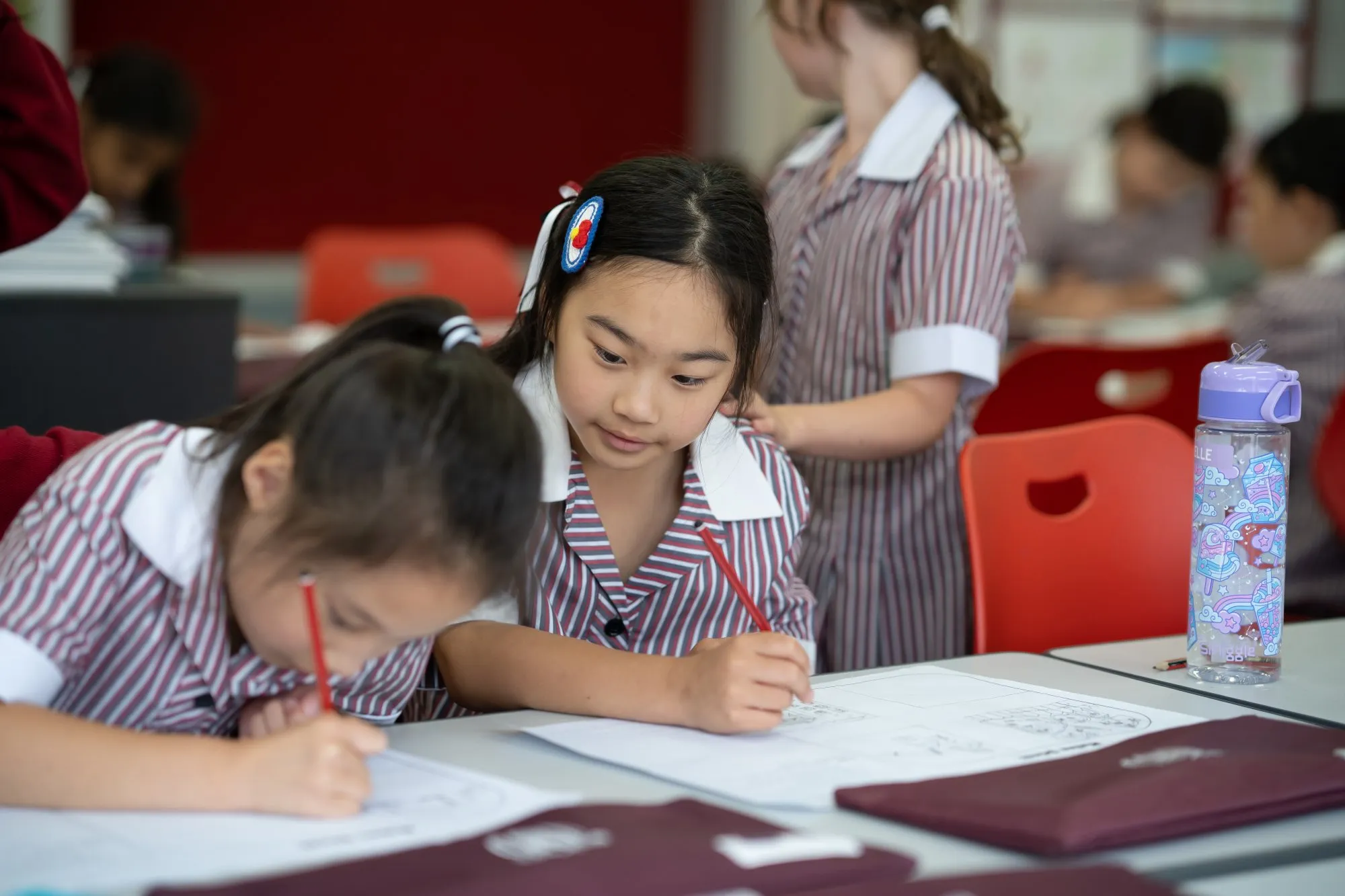
The Year 3 and 4 program is a time of consolidation of learning and developing independence of mind and actions. Students are beginning to recognise emotions and personal qualities and achievements, understand themselves as learners, express emotions appropriately, develop self-discipline and set goals.
The girls are learning collaboration, respect for others’ thoughts and opinions, and reflection of their choices. Literacy and numeracy continue to be a focus, along with inquiry learning expeditions in which students pursue mastery of knowledge and skills, develop beautiful work and understand themselves better and the world around them.
It is a time when the girls start doing new things like using their ID cards, to sign in and out at Junior School Reception, moving into new choices in uniform and having a great range of opportunities through the signature programs available to them.
Years 5 and 6
Years 5 and 6
A broader and deeper curriculum allows your child the opportunity to build meaning and refine their understandings across a range of subjects. Ideas of a more abstract nature are introduced, and the girls are encouraged and supported to take responsible ‘risks’ with their learning to achieve set goals.
The development of good character during this age is highly regarded. We expect the girls to work independently, show initiative, become confident, resilient and adaptable. They are encouraged to contribute to civil society, accept and acknowledge difference and diversity. They are developing their capacity to understand relationships, negotiate and resolve conflict, make safe decisions and give back to their communities, in other words their ‘character counts’.
The girls experience further development in the co-curricular, wellbeing and leadership programs as they progress through the Junior School. They are presented with school experiences that encourage growing independence, responsibility, leadership and resilience. As your child approaches the exciting transition to Senior School, activities are carefully structured to prepare her for the next important stage.
.webp)
Outcomes
Parents choose Korowa for their girls because our program delivers:
Strong Academic Foundations
Korowa girls consistently achieve high levels of literacy and numeracy achievement; strong engagement in inquiry and problem-solving; and deep learning across disciplines.
Exceptional Student Wellbeing
Students establish strong relationships with teachers; receive tailored pastoral care; and there are leadership opportunities for every girl.
Future-Ready Skills
A Korowa education features excellent communication, collaboration, creativity, critical thinking, digital and scientific literacy, and citizenship and global awareness.
A Seamless Transition to Senior School
Students move into Year 7 confident, capable and excited for the next chapter.
Prep to Year 6
Curriculum Guide
Communication and Expression
Program Overview
Young people want to make a difference, to address real issues in the world, and seek to influence today's decision-making.
Possessing strong communicative skills and the ability to effectively use technology as a conduit of communication will be vital to future success. We support young people to ensure they can become effective communicators and collaborators so they can have a positive influence about issues they are passionate about.
English
The English curriculum is built around the three interrelated strands of:
- Language,
- Literature, and
- Literacy.
Teaching and learning programs balance and integrate all three strands. These focus on developing students’ knowledge, understanding and skills in listening, reading, viewing, speaking, writing and creating.
Learning in English builds on concepts, skills and processes developed in earlier years, and teachers will revisit, strengthen and develop these as students journey through their Primary years. Developing a love and passion of literacy, whilst developing mastery of skills is a priority in the Junior School.
Language (German)
All students in Junior School study German. An emphasis is placed on broadening the students’ overall understanding and appreciation of the culture and customs of German people.
The emphasis in the Languages program is on enjoyment, participation and skill acquisition in the foreign language. Aural-oral skills are of primary significance, with an increasing emphasis being placed on reading and writing skills in Years 4, 5 and 6.
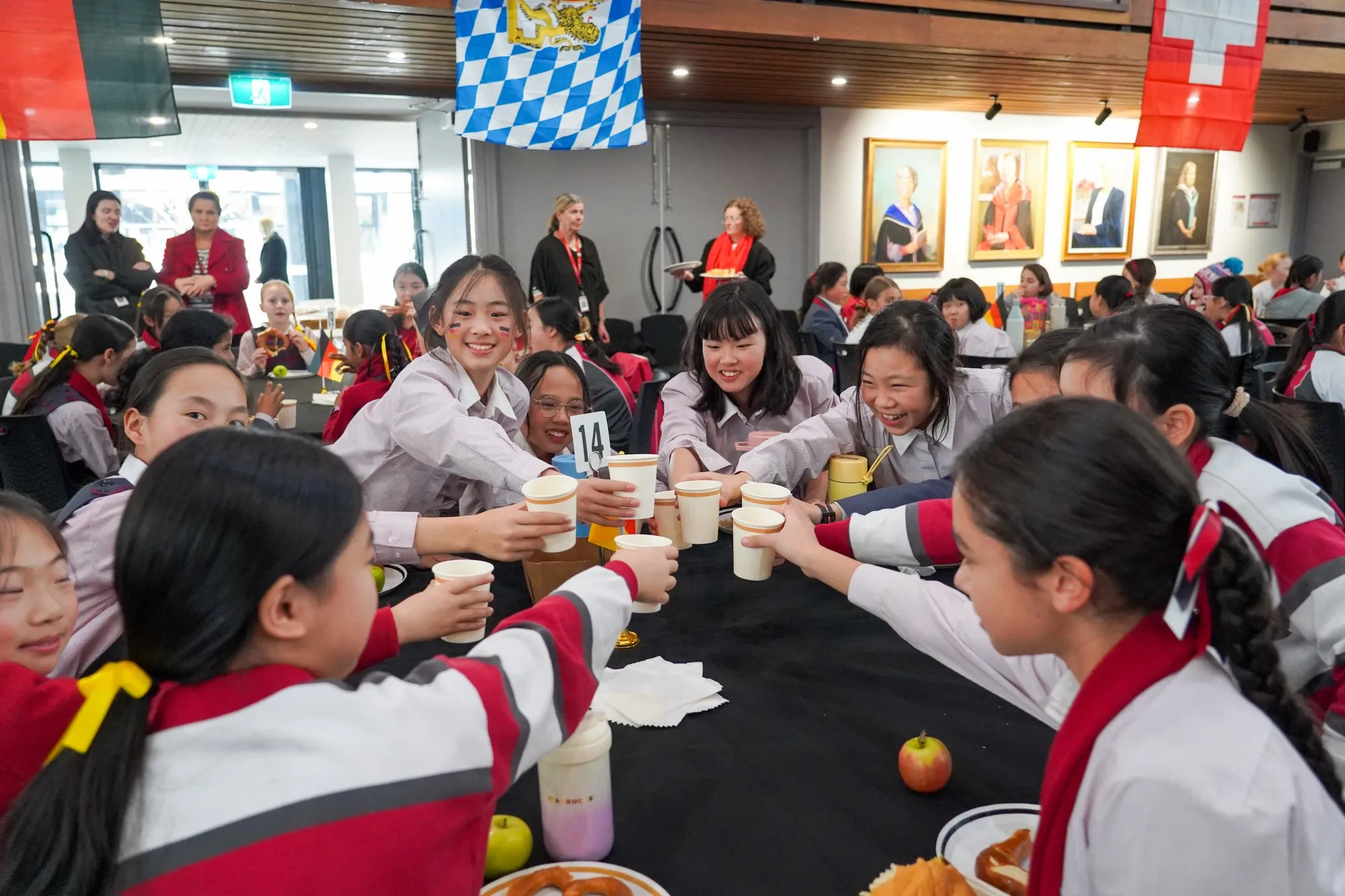
During the year, the whole Junior School is involved in a German celebration.
Music
Music has played an important role at Korowa for much of its history. The Music program is founded upon the belief that an understanding, and appreciation of Music begins in early childhood and continues throughout life.
The Junior School Music Program includes both Kodaly and Orff methods. Skills are developed through singing, playing, listening, moving and creating. The program is planned and sequenced to suit the developmental stages of the child.
Visual Arts
The Visual Arts program is designed to inspire students’ interest in Art and provides opportunities for them to develop their artistic and creative talents with confidence.
The study of Visual Arts encourages observation of the world around them, visual expression and appreciation of one’s own work, and the work of others. Students develop an awareness of shape, dimension, line, texture, colour, pattern and tone through drawing, painting, clay, textiles, collage and three-dimensional modelling.
Dance and Drama
Prep students have a dance program known as Creative Movement. In Years 5 and 6, students explore Dance and Drama.
In Dance, students explore how the elements of dance, choreographic devices and production elements communicate meaning in dances they make, perform and view. They describe characteristics of dances from different social, historical and cultural contexts that influence their dance making. Students structure movements in dance sequences and use the elements of dance and choreographic devices to make dances that communicate meaning. They work collaboratively to perform for audiences, demonstrating technical and expressive skills.
In Drama, students discover how dramatic action and meaning is communicated through what they make, perform and view. They learn how drama from different cultures, times and places influences their own drama making. Students work collaboratively as they use the elements of drama to shape character, voice and movement in improvisation, play building and performances of devised and scripted drama for audiences.
Exploration and Solutions
Mathematics
In Mathematics, students develop essential knowledge, skills and understanding across the six strands. Through engaging, problem-solving experiences, students learn to apply these concepts in real-world situations.
They communicate their thinking using appropriate mathematical language and select effective strategies to solve problems. As students progress, they become increasingly confident and independent learners who can interpret information, justify their thinking, and apply their mathematical understanding in meaningful contexts.
Technologies
Students apply their knowledge, practical skills and processes when using technologies to create innovative solutions, independently and collaboratively. Our girls will develop knowledge, understanding and skills to respond creatively to current and future needs.
The practical nature of the Technologies learning area engages our girls in critical and creative thinking, including understanding interrelationships in systems when solving complex problems. A systematic approach to experimentation, problem-solving, prototyping and evaluation instils in our girls the value of planning and reviewing processes to realise ideas.
Students develop capacity for action and a critical appreciation of the processes through which technologies are developed and how technologies can contribute to societies.
Science
Through this subject, students will be introduced to some of the fundamental concepts of Science found in the strands: Science Understanding, Science as Human Endeavour and Science Inquiry Skills, allowing them to develop their ability to think abstractly while expanding their practical skills through investigative experiments. These strands of the curriculum are interrelated, and their content may be taught in an integrated way across the Primary years. As students progress through the years they begin to apply their understanding to real-world problems in order to develop solutions.
Science is taught across the years from Prep to Year 6. Year 5 and 6 have classes in the Margaret Brumby AM Junior Science Laboratory. Flexible in its design, this space will allow experiential and investigative learning through the use of specialised equipment and maker space facilities. This room has been designed to not only allow us to expand our science offering but it will also provide kitchen facilities to support learning through our Stephanie Alexander Kitchen Garden and our indigenous garden spaces for ongoing experimentation, analysis of collected data and cooking of produce.
Humanities (Knowledge Architects)
Program Overview
Knowledge architects are visionaries who interrogate the lessons of both past and present to imagine and ultimately build a better future for all. Since ancient times, students of the Humanities have been at the forefront of our most complex and important debates about issues of social, cultural, economic, ideological and political significance.
The lenses of History, Geography, Civics and Citizenship provide an understanding of the problems, motivations and moral complexities of the human condition that inform humanity’s actions in the face of local, national and global challenges.
An examination of these subjects encourages individual reflection, intercultural awareness, empathy and an appreciation for the beauty and power of knowledge. All subjects are living, breathing subjects which are adapted to meet contemporary needs. In studying these subjects, students develop transferable skills including the ability to write, argue and research.
History
Learning about history through integrated studies provides opportunities to develop historical understanding through key concepts including continuity and change, cause and effect, perspectives, empathy and significance. These concepts are investigated within a particular historical context ranging from personal and family histories to Australian colonies and democracy. This facilitates an understanding of the past and provides a focus for historical inquiries.
Geography
Developing students’ geographical knowledge, understanding and skills is provided through the inclusion of inquiry questions and specific skills, including the use and interpretation of maps, photographs and other representations of geographical data. The content of each year level is organised into two strands: Geographical Knowledge and Understanding and Geographical Inquiry and Skills. These strands are interrelated and are taught in an integrated manner.
Civics and Citizenship
From Year 3 to Year 6, students begin to explore their understanding about democracy, laws, citizens and citizenship, diversity and identity. Drawing on familiar contexts and personal experiences of fair play, different points of view, rules and consequences, and decision-making, students begin to develop an understanding of democracy as rule by the people (democracy, laws and citizens).
Students explore how individuals, including themselves, participate in and contribute to their community. They explore cultural diversity in their community; in particular, how belonging to different groups can shape personal identity (diversity and identity).
Wellness
Program Overview
Developing and maintaining a healthy lifestyle is vital in today’s modern world. Crafting sustainable solutions with a low impact on the earth is a priority in our program development. Creativity, collaboration, communication, problem finding and solving are all characteristics of subjects that sustain a healthy lifestyle. Programs establish healthy habits, routines, nutrition and wellbeing strategies which last a lifetime while building resilience, camaraderie and collaboration. A positive attitude towards health and physical activity will foster a lasting desire to remain physically fit and will motivate students to continue their involvement in sport and physical activity throughout their lifetime.
Korowa’s Sports and Wellbeing Centre has something for every student. This complex provides students with state-of-the-art facilities including a swimming pool, dance studios, netball courts, PMP studio, pilates space, drama room and Ivory Cafe.
Physical Education (PE)
Physical Education (PE) is an integral component of each child’s life. The program is designed to provide every student with challenging activities to participate in and achievable goals to strive towards. Fitness is a key component in developing a healthy lifestyle and is encouraged through participating in regular activity.
Children experience a range of activities including PE, Sport and House events as well as the opportunity to participate in co-curricular sporting activities at an interschool level. Students are supported to value themselves and their peers. Positive reinforcement, respect for others and working as a team are key aspects in developing positive attitudes, resilience and appropriate social interaction, both in PE and Sport classes as well as in day-to-day life.
Swimming
Our ELC 4 to Year 6 students have fortnightly swimming lessons. Being able to swim is an extremely important life skill. Lessons provide children with confidence, which is great for self-esteem. Children will learn about water safety in and around water.
This program develops children’s independence and confidence, they carry their own swimming bags and look after their belongings, swimming in small groups with our instructors. Children develop a range of skills including; how to enter and exit the water safely, torpedo gliding, strong kicking legs and floating whilst wearing a life jacket. Whilst the older students build upon their swimming skills. Culminating in the Year 6 students completing the “Victorian Water Safety Certificate”.
Bodyworks
This health and wellbeing program has been specifically designed to teach students to enhance their own and others’ health, safety and wellbeing in a sequential series of lessons across the Prep to Year 6 environment. It provides a comprehensive Health Education program that is engaging and informative at each year level.
Perceptual Motor Program (PMP)
In our purpose built PMP space, ELC 3 to Year 2 students are involved in a movement-based program which helps younger students improve their eye-hand and eye-foot coordination, fitness, balance, locomotion and eye-tracking skills.
Explore Korowa for your family
Experience Korowa in person
Frequently asked questions
How is learning personalised?
Teachers track progress closely and tailor learning through differentiation, targeted instruction and enrichment opportunities. Korowa's learning support, as well as our enrichment and extension program, ensure that each student receives tailored education and support.
What wellbeing is provided?
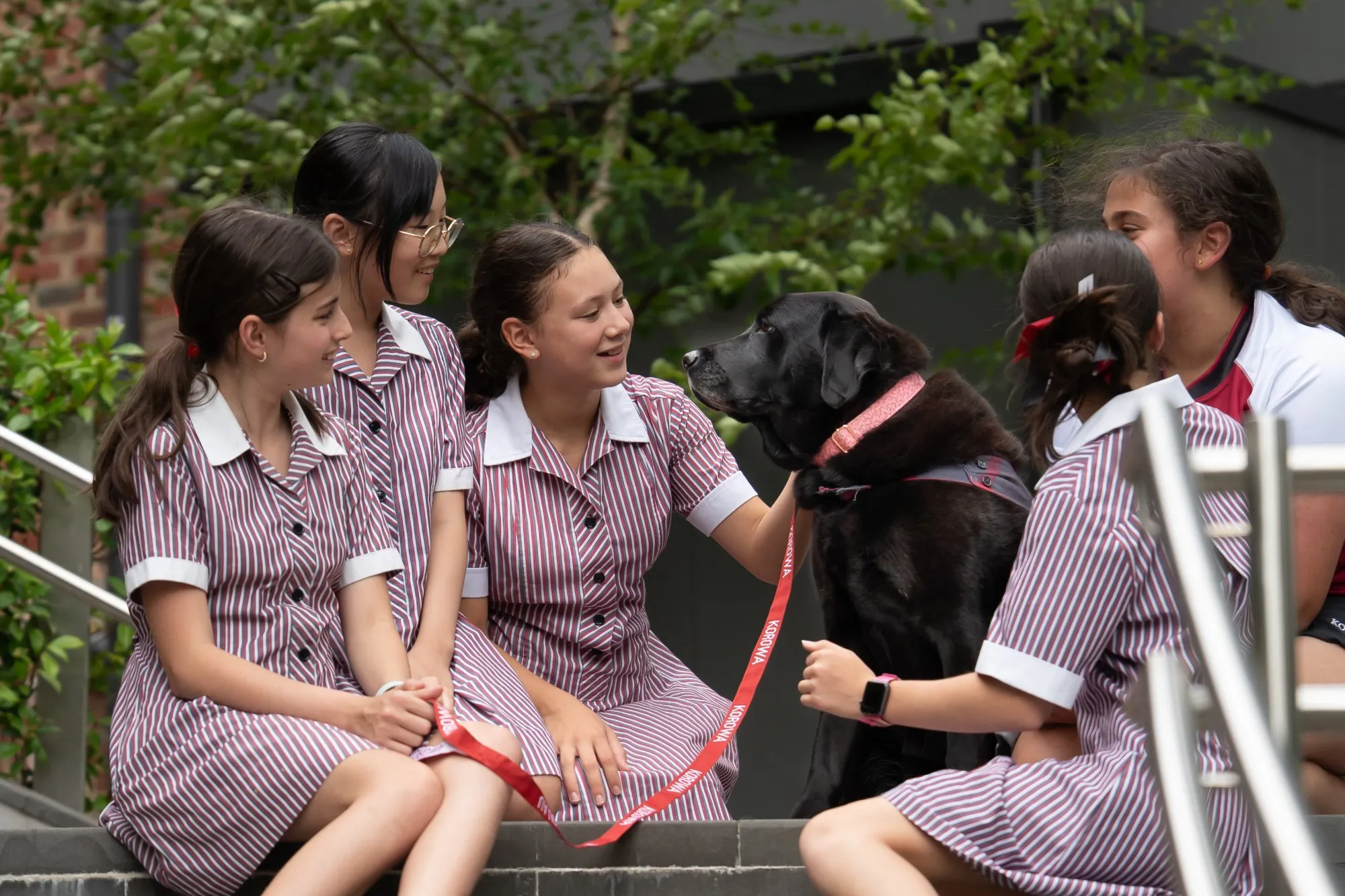
Wellbeing is integrated into every aspect of the school, across every age-group. This includes Bodyworks, class culture, leadership programs, proactive social-emotional learning, school psychologists, two on-campus wellbeing dogs, and purpose-developed facilities. Learn more about Korowa's Wellbeing Program here.
Is the school day structured?
Yes. The school day is structured with a balance of core subjects, specialist classes, wellbeing, outdoor time and co-curricular options.
What co-curricular opportunities are available?
Korowa has a vibrant community and a rich and diverse range of co-curricular activities and clubs for students. These include sports, music ensembles, drama, visual arts, special-interest clubs, competitions, leadership roles and more.
Does the junior school provide after-school care?
Yes. For students in Year 4 to 6, the Korowa Out of School Hours (KOSH) program is available free of charge from Monday to Thursday, with a dedicated Supervisor.
Students are required to register to attend, and must be formally signed out. The hours available are 3.15pm to 6pm. For more information, please email the KOSH Supervisor, Chrissie McCormick at KorowaOutofSchoolHub@korowa.vic.edu.au
Book a tour today to see our vibrant learning community in action and discover why Korowa is the right choice for your daughter's education.