When parents think about literacy in junior school, they often picture spelling tests, reading groups, and handwriting practice. These skills remain important. However, some of the most powerful learning happens when students become so engaged in an idea that they want to take it further.
That is exactly what happened in a recent Year 3 classroom in Korowa's Junior School.
What began as a short unit on letter writing quickly evolved into a much larger learning journey. Through explicit teaching, authentic experiences, and a teacher willing to follow her students' curiosity, a two-week literacy focus became one of the highlights of the term.
Building confidence through letter writing
Before students could begin writing letters of their own, they needed to understand how written communication works.
Through hands on activities, Year 3 explored the key features of letters and postcards. They identified greetings, body paragraphs, signatures, addresses, and stamps, developing an understanding of how each element serves a purpose.
Students then analysed examples, unpacked the structure of different forms of written communication, and practised applying these conventions in their own work.
This explicit teaching helps students build confidence as writers while developing essential literacy skills that will support them throughout their education.
The classroom mailbox that brought letter writing to life
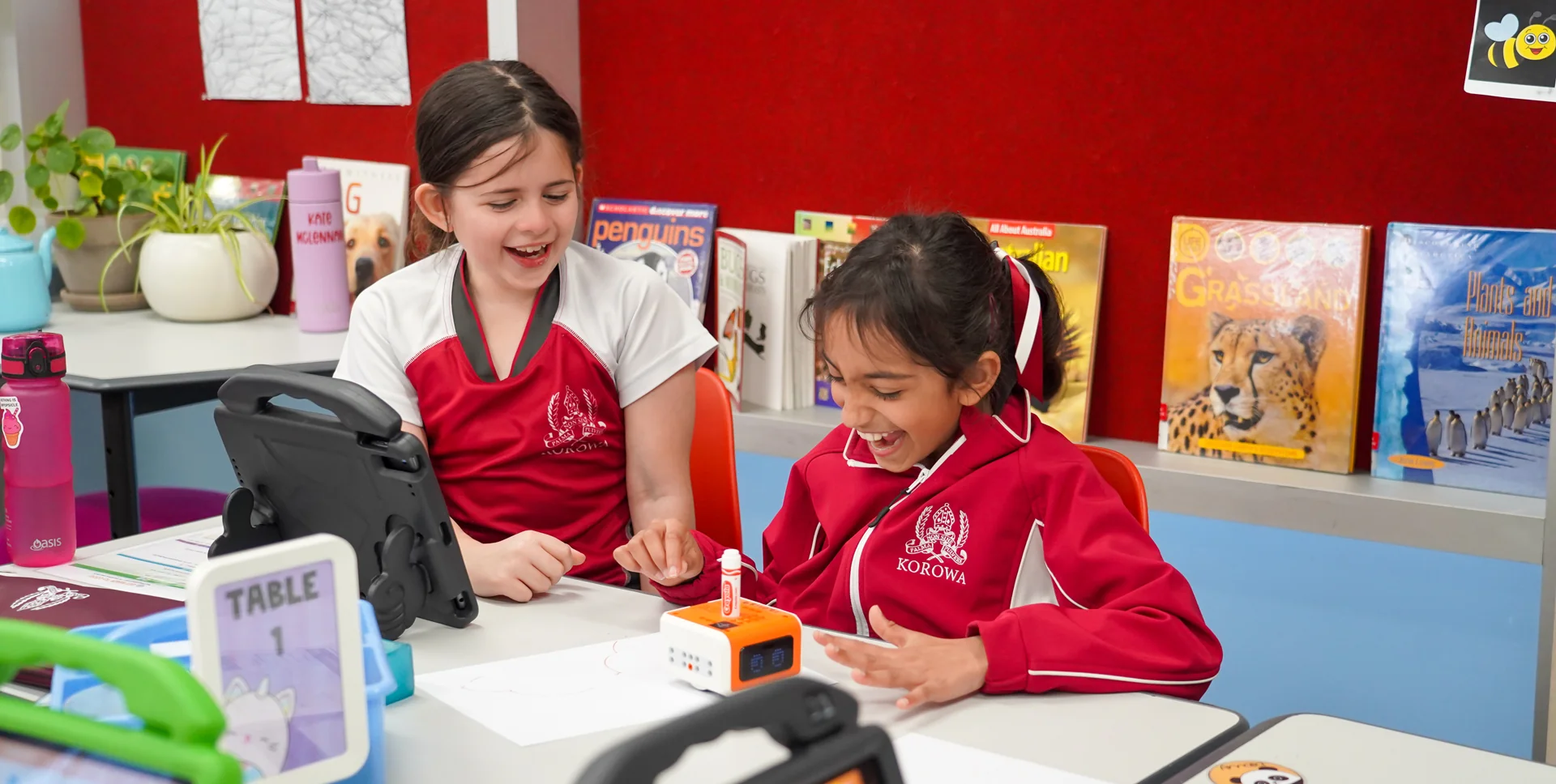
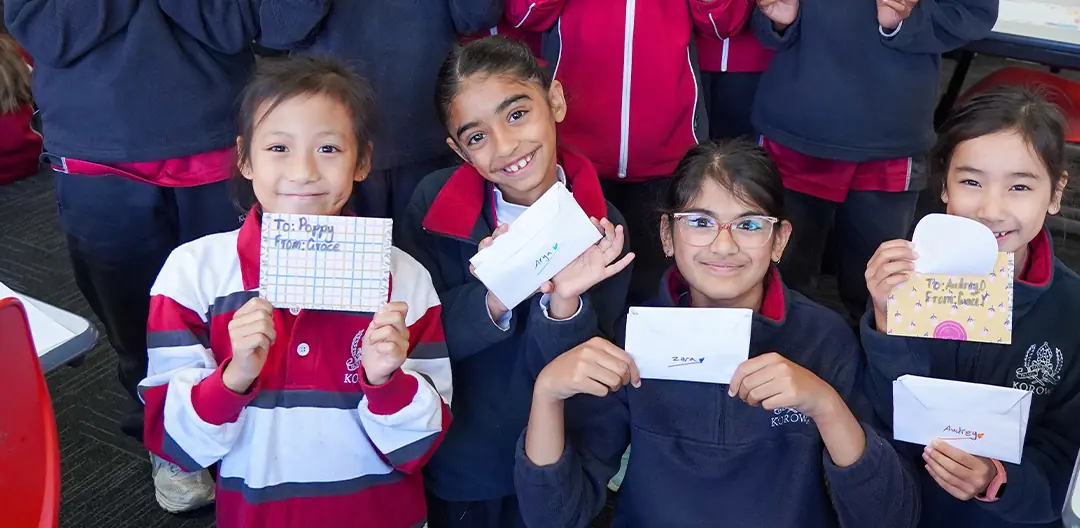
Once students understood the foundations of letter writing, Mrs McLennan introduced a classroom mailbox.
Whether writing to a friend, a classmate, or a teacher in the Junior School, students can post their letters throughout the day. Then, each afternoon, Mrs McLennan steps into her role as the class postwoman, sorting and delivering the day's mail.
What began as a simple way to practise letter writing quickly became one of the most anticipated moments of the day. Students eagerly checked for new messages, wrote thoughtful replies, and discovered the excitement of communicating through handwritten letters.
For Zara, the appeal lies in the conversations that letters create.
"It's really fun and it gives you the opportunity to write to everyone. I like getting letters when they have lots of questions for me to answer!"
Ashleigh discovered that letter writing created opportunities to stay connected beyond the school day.
"You can write a message to someone who you wouldn't be able to talk to after school because they have an activity. I like getting letters that have art in them."
When teachers follow student curiosity
The letter writing unit was originally designed as a two-week learning experience.
However, Mrs McLennan quickly noticed something unusual. The students were not ready to move on.
They were writing during free moments, checking the mailbox throughout the day, and finding new ways to use their skills. Rather than ending the unit as planned, she began weaving letter writing into other classroom learning experiences, allowing students to continue developing their communication skills in new and meaningful ways.
This is one of the strengths of a responsive classroom. While strong teaching requires careful planning, it also requires flexibility. Great teachers recognise when students are deeply engaged and use that enthusiasm to extend learning further.
The result was a learning experience that felt purposeful, relevant, and genuinely exciting for students. For parents, it is a powerful reminder that engagement and achievement often go hand in hand. When students are invested in their learning, they are more willing to take risks, ask questions, and deepen their understanding.
Writing with a real purpose
One of the highlights of the project came when students used their formal letter writing skills to write invitations to Principal Mrs Booth for their spelling bee.
Students carefully considered audience, tone, structure, and presentation before addressing their envelopes and hand delivering their letters to Mrs Booth's office.
The experience gave students a real audience for their writing and demonstrated how literacy skills extend far beyond the classroom.
When learning feels authentic, students are often willing to invest more effort and care into the process.
Creating confident and enthusiastic learners
Perhaps the clearest measure of the project's success comes from the students themselves.
For Poppy, letter writing became something she genuinely looked forward to.
"Letter writing is fun, just like playing. There's no stress about it because you always have time to write a letter. I like when my letter has illustrations and lots of details."
Her words capture something important. When students feel ownership over their learning, they become more willing to experiment, create, and challenge themselves.
The Year 3 letter writing project strengthened literacy skills, communication, creativity, and confidence. More importantly, it demonstrated what can happen when teachers listen closely to their students and allow curiosity to shape the learning journey.
At Korowa, we know that a love of learning cannot be forced. It grows when students feel engaged, connected, and inspired by what they are ding.
What began as a two week literacy unit became something much bigger: a classroom culture built around communication, curiosity, and connection. For Year 3, every letter delivered was another opportunity to learn, create, and engage with the world around them.