Korowa Perspectives
Korowa Perspectives
Making the Leap to Secondary School
The transition to secondary school is about far more than timetables, lockers and new subjects. Research suggests that students who feel known, supported and connected are more likely to navigate the transition successfully and develop the confidence to thrive in the years ahead.
The Big Question
For many families, the decision between an all girls' and co-educational school is one of the most significant choices they will make during the secondary school years.
Families in Australia are fortunate to have access to many excellent schools, both government and independent, and both co-educational and single-sex. However, decades of educational research continue to show that girls' schools produce distinct and measurable outcomes for girls, particularly in areas such as leadership, confidence, participation and STEM engagement.
These differences are not accidental. They are the result of environments intentionally designed around girls and the way they learn.
What the Research Tells Us
Research from the International Coalition of Girls' Schools and Australian and international university studies has consistently found that girls educated in girls' schools are more likely to:
- Pursue leadership opportunities
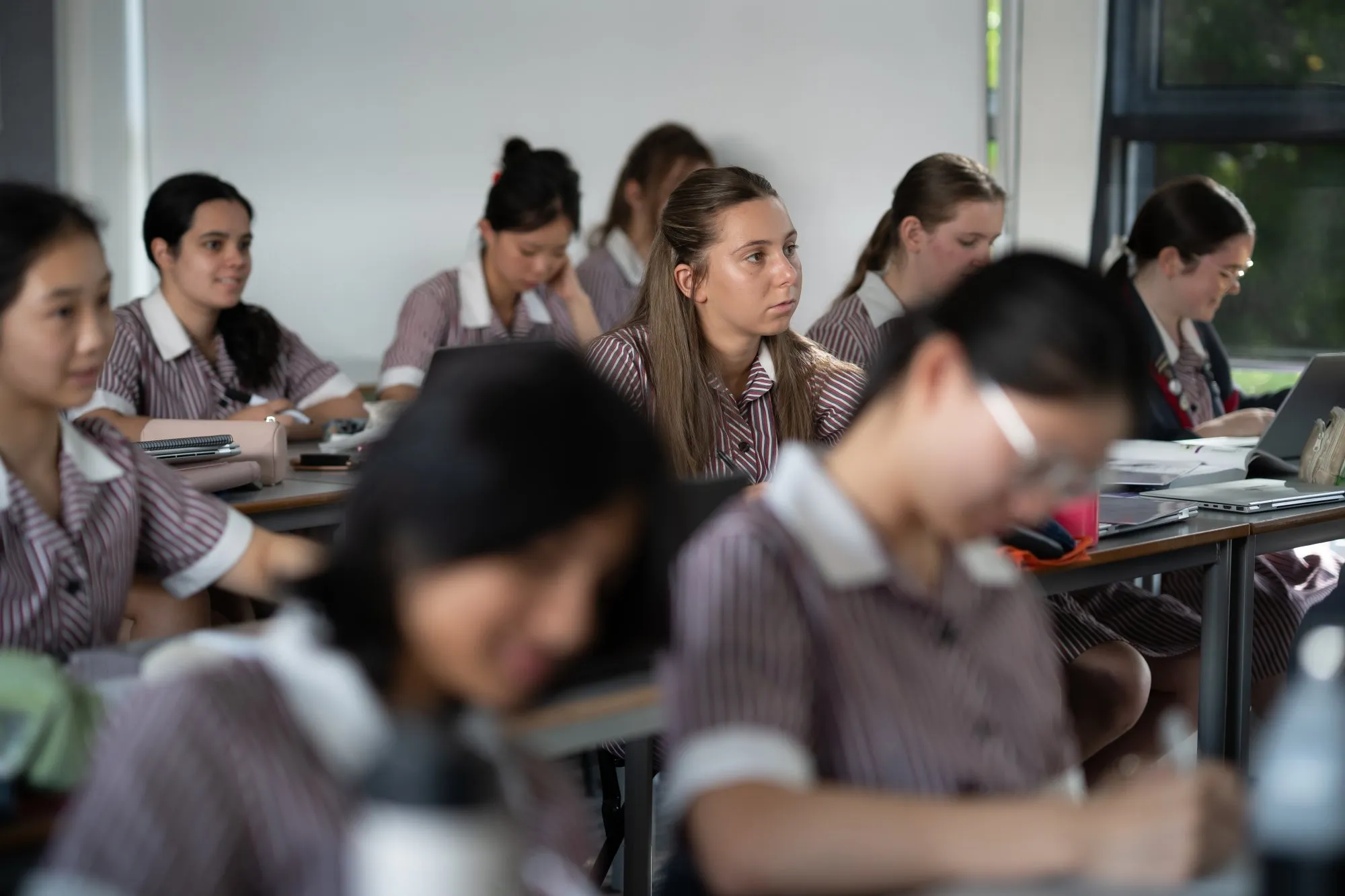
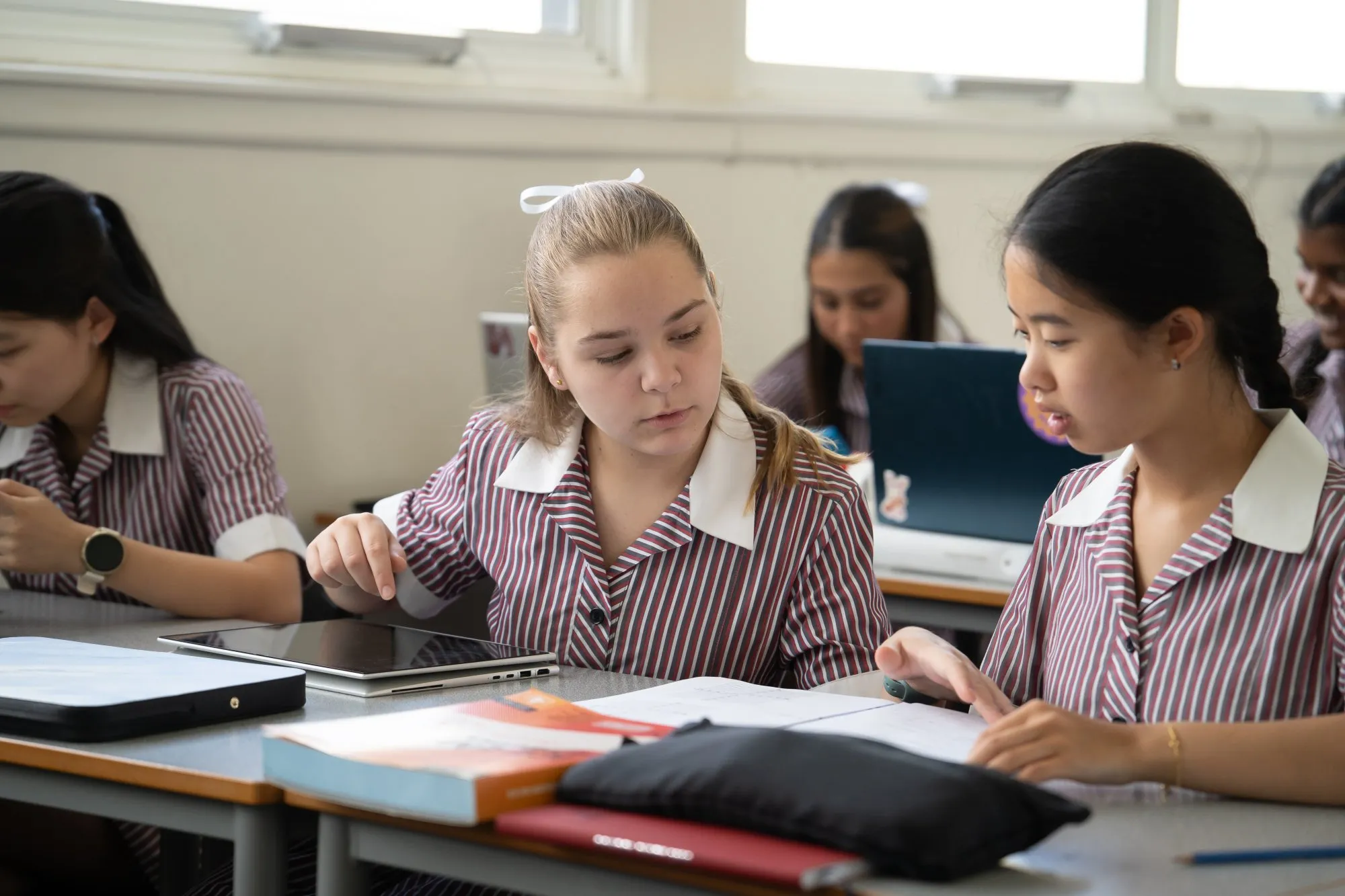
- Participate actively in class
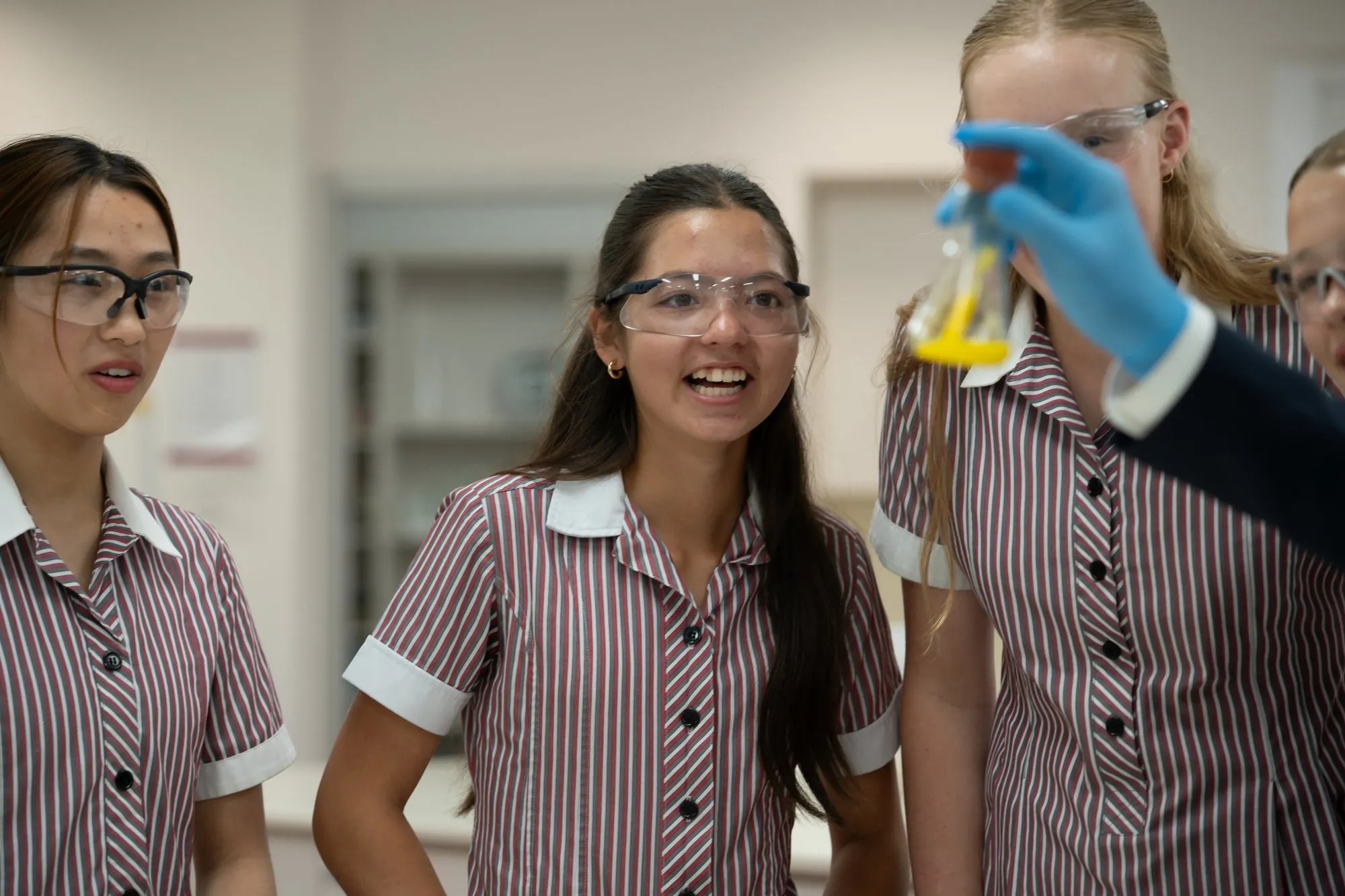
- Continue into STEM-related study and careers
One Australian study conducted by researchers at Monash University found that girls attending single-sex schools were up to 85 per cent more likely to take advanced STEM subjects than girls in co-educational settings. They were significantly more likely to study advanced mathematics, chemistry and physics.
This is a substantial difference. In any educational setting, a participation shift of this magnitude deserves careful attention.
The Importance of Participation
Academic outcomes are influenced by far more than curriculum. Students are shaped by the expectations, opportunities and experiences that surround them every day.
Research into girls' education repeatedly points to the importance of participation. Students who contribute more actively in class, take intellectual risks, seek leadership opportunities and engage deeply with their learning are more likely to develop confidence in their own capabilities.
The question, then, is not simply whether girls can succeed in a particular environment. It is whether they are consistently encouraged and expected to do so.
Leadership, Visibility and Expectation
In an all girls' school, girls occupy every visible position of leadership and achievement.
The captains are female. The lead debaters are female. The top mathematics students are female. The robotics team leaders are female. The editors are female. The theatre performers are female. The rowing captains are female. The speakers at assembly are female.
Leadership is not something girls occasionally witness in others. It is something they see modelled every day.
That visibility should not be underestimated. Research into girls' education consistently points to the impact of representation and expectation on confidence, participation and aspiration.
In environments where girls are expected to contribute, lead and take intellectual risks, they are more likely to do so.
Academic Results... and Beyond
Importantly, this conversation is not simply about academic achievement, although girls' schools consistently perform strongly in that regard.
It is also about what students come to believe is available to them after they graduate.
In many co-educational settings, gender stereotypes (often subtle and entirely unintended) can still influence subject choices, classroom participation and leadership dynamics. Australia continues to see significant underrepresentation of women in STEM fields, a disparity many researchers identify as beginning during the school years.
Girls' schools seek to interrupt that pattern.
By creating environments in which girls are consistently encouraged to lead, speak, question, create and achieve, they help expand students' sense of what is possible.
A Korowa Perspective
At Korowa, girls are not encouraged to participate as an exception, they are expected to participate as a given.
Academic ambition, leadership, curiosity, courage and confidence are treated not as gendered qualities, but as ordinary parts of a girl's education.
This is one of the enduring strengths of girls' schools. They create environments in which girls are not competing to find space within the culture around them.
They begin from the assumption that girls already belong at the centre of it.
Checklist for Families
As you consider different school environments, it can be helpful to ask yourself:
- In which environment is my daughter most likely to feel confident contributing, participating and taking risks?
- What opportunities will she have to develop leadership skills and experience?
- How are girls encouraged to engage with subjects such as mathematics, science and technology?
- What messages does the school send about ambition, achievement and possibility?
- Does the school actively challenge gender stereotypes, or assume they will disappear on their own?
- Most importantly, what type of environment will help her become the person she wants to be?