Year 10 2027 Curriculum Guide

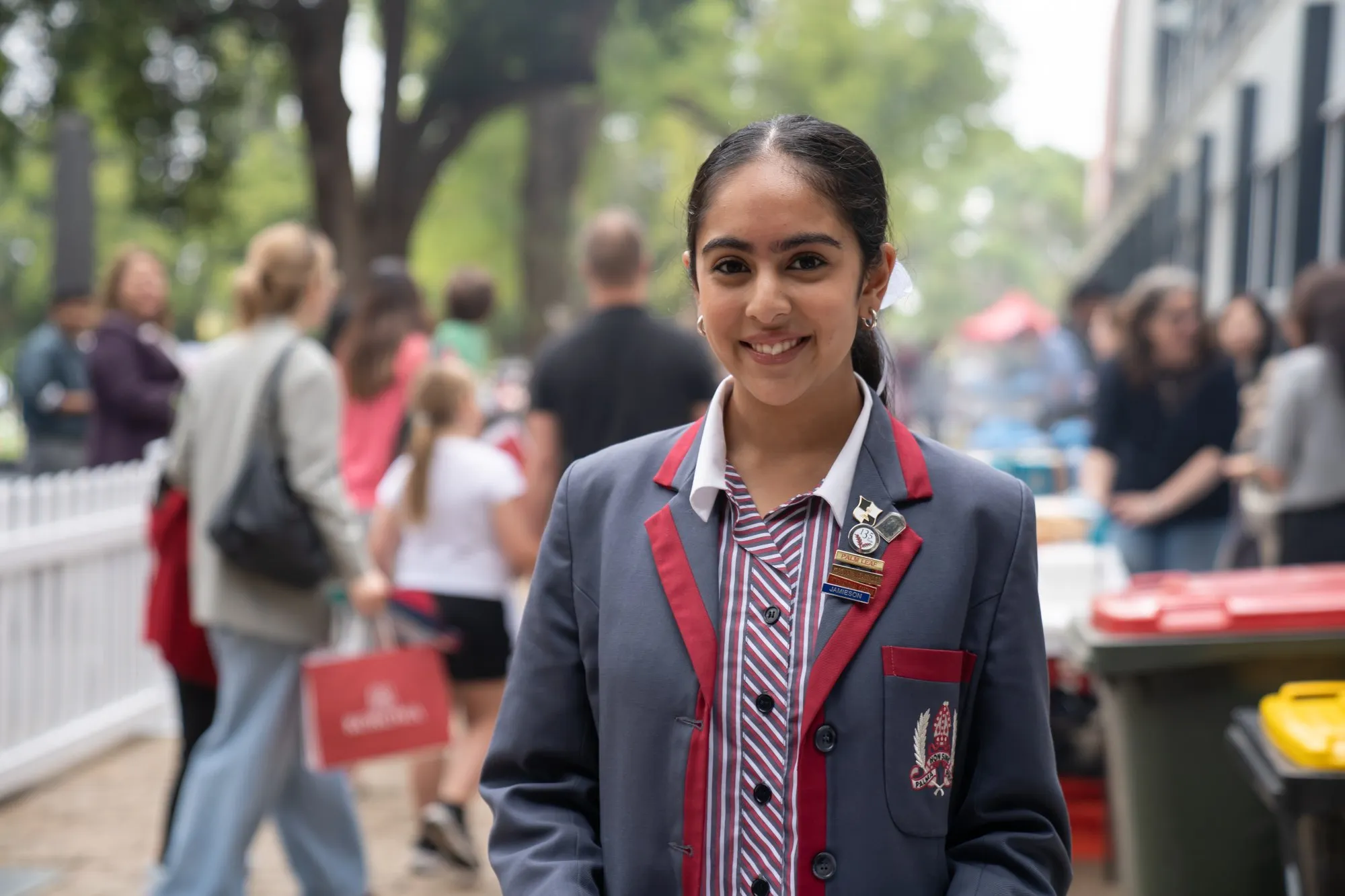
Smiling girl in a school uniform with red and blue accents standing outdoors with blurred people in the background.

An IMportant Stepping-stone

At Korowa, we believe young people are powerful influencers who can shape their world with confidence, compassion and purpose. Year 10 is an important stepping stone—an opportunity to make thoughtful subject choices that reflect their interests, ignite their passions and support their future pathways.

Our curriculum is designed to develop curious, capable and courageous learners. Across all subjects, students build the skills to communicate effectively, think critically, collaborate with others and engage meaningfully with contemporary issues. Whether exploring ideas through the Arts, analysing the world through the Humanities, or developing skills in other disciplines, each subject contributes to their growth as an informed and empowered individual.

We encourage our students to choose subjects that challenge and inspire them—where they can discover their strengths, explore new possibilities and begin shaping the direction of their future.

Core Subjects

Enriched English / English as an Additional Language (EAL)

How can the study of English empower us to navigate our world critically and thoughtfully?

In Year 10 Enriched English and English as an Additional Language (EAL), students immerse themselves in the world of literature, discuss current issues and explore ideas to develop their understanding of themselves as individuals and as members of the global community.

Our students also develop their ability to create texts and to share their voice through the power of words, both orally and in writing. The course is designed to prepare students to study the three available English pathways in VCE:

  • English or English as an Additional Language (for eligible students only),
  • Literature; and
  • English Language

All students in Year 10 will study English as a core subject.

Eligible EAL students will be placed in the Year 10 EAL class. The Year 10 EAL course follows a similar structure to the Year 10 Enriched English course, with some adjustments to accommodate the language needs of students.

Mathematics

Does Mathematics empower us to make sense of the world around us?

Mathematics supports and challenges each student, to enable you to explore your potential and, through a level of curiosity and satisfaction, be extended in your own way. Assessments are designed to prepare and enable success for each student.

Carefully guided by assessment data and recommendations by staff, the Head of Department will determine the appropriate class for each student.

The three options are:

  • 10 Mainstream,
  • 10A Mathematics, or
  • VCE Mathematical Methods Units 1 and 2

10A Mathematics is a prerequisite for VCE Mathematical Methods in Year 11, while 10 Mainstream fulfils the skills required to progress to VCE General Mathematics and VCE Foundation Mathematics.

Accelerated Option: VCE Mathematical Methods Units 1 and 2

Mathematical Methods would replace student’s Year 10 Mathematics subject. In order to be eligible students must have completed Year 9A Accelerated Maths and achieved a minimum of 80% in all assessment tasks. These requirements must be upheld throughout Semester 2. Further information can be found in the VCE Curriculum Guide.

Health and Physical Education (PE)

Year 10 Health and Physical Education (PE) provides students with opportunities to develop the knowledge, understanding and skills required to make informed decisions about their health, wellbeing and physical activity participation. Through both theoretical and practical learning experiences, students explore contemporary health issues and engage in a variety of physical activities that promote lifelong participation in sport and recreation.

In Health, a core subject, students investigate factors that influence community health and wellbeing, examine the characteristics of respectful relationships, and analyse the impacts of risk-taking behaviours on individuals and communities. Students develop strategies to promote positive health outcomes and enhance personal and social wellbeing.

In core Physical Education, students participate in a range of practical units including community sport and recreation, fitness, SEPEP Volleyball and team games. These units focus on developing movement skills, tactical awareness, leadership, teamwork and personal fitness while encouraging active and healthy lifestyles now and into the future.

Both subjects provide students with valuable knowledge and practical experiences that support their physical, social and emotional development, preparing them for lifelong participation in sport, recreation and healthy behaviours.

Science

Underpinning each of the elements of STEAM, Science at Korowa provides you with the conceptual frameworks which you can apply to the analysis of global issues. Through the exploration of Biology, Chemistry and Physics, develop your capacity to analyse, critique, refine and evaluate real world applications of the concepts relating to these areas of science.

Throughout the year you will develop your ability to represent your understanding of ideas analytically and diagrammatically, while practical tasks facilitate collaboration in order to ideate, develop, test, refine and evaluate investigations.

Four semester-length options are provided. Students must select two of the below options:

Semester 1:

  • Exploring the Natural World
  • Investigating the Natural World

Semester 2:

  • Exploring the Physical World
  • Investigating the Physical World

Students must select one Natural World (Biology, Chemistry and Earth Sciences) and one Physical World (Physics, Chemistry and Space Sciences) option.

‘Exploring’ options focus on the way in which ideas can be observed in the broad scope of real world, and daily life applications and largely resemble a standard Year 10 curriculum.

‘Investigating’ options focus on the development of abstract analytical and data literacy skills in preparation for VCE studies and therefore have a VCE focus in covering the Year 10 curriculum.

Note: Although ‘Investigating’ options focus on VCE preparation, students can still select a VCE science in Year 11 by pursuing ‘Exploring’ options.

Creative Art Electives

Art

In Art, you will explore how artists communicate ideas, emotions, and stories through a range of exciting creative processes. Develop your skills, experiment with materials, and learn how to transform your observations and imagination into powerful artworks.

In ‘Portraiture’, you will explore the world of portrait painting through the study of The Archibald Prize, Australia’s most celebrated portrait competition. Investigate the work of influential artists, explore different painting styles, and develop your own approach to portraiture. You will learn the techniques of oil painting and even prepare your own canvas by stretching and priming it before creating your final portrait artwork.

In ‘Exploration of the Natural World’, you will investigate the beauty, complexity, and fragility of the environment through a variety of media including ink, pencil, paint, mixed media, and printmaking. Inspired by landscapes, plants, and animals, you will experiment with techniques to create artworks that reflect your own perspective on the world around you.

Throughout both topics, you will build your understanding of artists, develop your visual arts vocabulary, and learn how to analyse and discuss artworks with confidence. Art is a place to experiment, take creative risks, develop new skills, and discover your unique artistic voice.

This elective can be undertaken in either Semester 1 or Semester 2.

Ceramics

Discover the endless possibilities of clay in Ceramics, where you can transform your ideas into unique three-dimensional artworks. Learn traditional hand-building techniques such as coil, pinch, and slab construction while developing your own creative style. From sculptural vessels and imaginative creatures to meaningful artworks that express identity, stories, and emotions, ceramics allows you to bring your ideas to life.

Explore texture, form, colour, and surface decoration as you experiment with glazes, patterns, and sculptural details. You will learn how artists use symbolism and visual language to communicate powerful ideas and create artworks that are truly personal.

Whether you are inspired by nature, fantasy, culture, or the world around you, Ceramics provides a space to experiment, problem-solve, and create something completely your own. Get ready to get your hands dirty and discover the artist within!

This elective can be undertaken in either Semester 1 or Semester 2.

Creative Textiles

Creative textiles will allow you to develop your creative and practical skills through the design and construction of textile products. Through hands-on projects, students build confidence using the sewing machine and commercial patterns, while refining problem-solving and design thinking skills. Students learn how to creatively manipulate fabrics and fibres resulting in innovative textile products. They will investigate sustainable practices using a visit/excursion to an Op shop to inspire their design. Opportunities for personal choice and creativity allows students to develop unique outcomes that reflect their interests and developing skill set.

Skills learnt in Creative Textiles are applicable to Visual Communication Design and Art-Creative practice at VCE level.

This elective can be undertaken in either Semester 1 or Semester 2.

Media and Moving Image

How do media products manipulate an audience’s emotional response or their understanding of the world around them? How can ideas and stories be expressed through the application of media techniques?

In Media, you will learn how to use media techniques such as camera, acting, mise-en-scene, lighting, editing and sound to tell engaging stories. Students will both analyse and produce works that span a range of media forms including film, photography and music videos with opportunities for extension into animation. Students are given the opportunity to develop practical skills in using DSLR cameras, lighting equipment, microphones and Adobe editing software to produce their creative projects. In this elective, we will explore conceptual ideas relating to genre and style and how these are expressed through various media forms.

This elective can be undertaken in Semester 1 or Semester 2.

Media and Analogue Photography

How can photography help us explore our relationship with place, environment and community? How can alternative photographic processes be used to communicate ideas, stories and perspectives about the world around us?

In Media, you will learn how to use analogue and alternative photography techniques to create meaningful visual stories. Students will both analyse and produce media works that explore themes of place, connection to Country and our relationship with the natural environment through a First Nations Australian perspective. Students will develop practical skills in analogue darkroom photography, and other alternative photography techniques such as cyanotypes and phytograms, experimenting with light, natural materials and photographic imagery to create unique artworks. Opportunities may also be provided to collaborate on mixed-media and animation projects. In this elective, we will explore conceptual ideas relating to identity, environment, storytelling and belonging, and how these can be expressed through photographic forms.

This elective can be undertaken in Semester 1 or Semester 2.

2D Design: Messages and UX Design

In the age of information overload good information design is more important than ever. What is going to make audiences stop, engage and remember? What skills are required to make good designs? In this elective you will learn about the visual language designers use to communicate messages and the influence the way people live. Type and image are the key elements of messages design. Students will learn how to use manual and digital methods in innovative ways to create dynamic designs for print and screen formats. They will learn principles of good design and how design elements and principles and Gestalt principles of visual perception are used to engage viewers and communicate messages that attract attention. Projects are sourced from real and fictitious design needs and might include promotional campaigns for events, product branding design, packaging graphics, and app and interactive experiences (UX & UI) design.

This elective is undertaken in Semester 1.

3D Design: Architecture and Object Design

Environments are the places people live, work, study and play in. Architects, Interior Designers and landscape designers are the people who create them. Objects are the things people use and interact with every day. Product and Industrial designers are the people who design them. Designers in both these fields can create positive changes for the world by looking for solutions to design problems. In this elective, students will engage with processes that will teach them the principles of good design and how to create innovative designs using manual, digital and 3D design methods (prototypes/models) in the fields of Architecture and Object design. Students will learn how to take a project from initially identifying a problem to an end solution, using design thinking and evaluation techniques. Projects are inspired by real design problems and user needs and will include engagement in Architectural Projects (buildings, spaces and environments) and Objects (furniture, lighting, toys, fashion, accessories). Students learn to pitch and present ideas along their design journey.

This elective is undertaken in Semester 2

Performing Arts Electives

Dance, Creation and Appreciation

This unit extends the students personal movement vocabulary through regular training, and enhances their understanding of composition through creation of their own pieces, and appreciation of the works of others. Students will view, research and critically discuss a range of dance works from a variety of contexts and styles, learning to describe and discuss ways that their own, and others’ dance works communicate and challenge ideas and meaning.

This elective can be undertaken in either Semester 1 or Semester 2.

Dance Performance

In this unit, students explore how to choreograph and learn dance pieces for performance, a key skill required of VCE Dance students. Students will focus on developing their performance skills through practical dance workshops and rehearsals, exploring a range of dance genres and styles, learning how to perform with technical accuracy, expressive intent, and stage presence.

The unit will emphasise safe dance practices, body alignment, and movement control while encouraging students to respond to music and choreography with confidence, artistry and intention. Students will engage in individual and ensemble work, applying feedback to refine their performance quality and also critically analyse the works of others. The unit will culminate in a live and recorded presentation, allowing students to showcase their growth as performers and reflect on their development throughout the creative process.

This elective can be undertaken in either Semester 1 or Semester 2.

Theatre Studies: Foundations

In this elective, students explore the history of theatre and the ways practitioners use acting, directing and design to bring scripts to life for contemporary audiences. Students investigate a range of influential theatre styles from different historical periods and develop an understanding of how social, cultural and historical contexts shape performance.

Through practical workshops and performance tasks, students build skills in acting, directing and design while learning how to interpret scripts using the conventions of different theatre styles. They explore production areas such as costume, set, props, lighting, sound and performance, and apply these to the development of scenes for presentation. Students also attend and analyse a live theatre performance, developing their ability to discuss and evaluate theatrical choices using appropriate theatre terminology. Creativity, collaboration, communication and critical thinking are key focus areas, making this an ideal pathway into VCE.

This elective is undertaken in Semester 1.

Creating, Performing and Making

In this elective, students explore how to devise ensemble theatre from a stimulus, a key skill required of VCE Drama students. Students participate in Malthouse Theatre’s award-winning Suitcase series combining in-class activity with in-theatre performance. This innovative program is an opportunity for students to develop and expand their theatre making skills. It encourages students to consider how the performing arts can act as an advocate for change for prevalent societal issues? Students learn to manipulate the elements of drama, playmaking techniques, expressive and performance skills, making this an ideal pathway into VCE.

This elective is undertaken in Semester 2.

Music Matters - Organisation

A particular area of focus for this semester will be the study of ‘Absolute’ Music, that is, music which exists for its own sake, and which is not intended to represent something else. All works chosen for performance may be freely determined.

This elective is undertaken in Semester 1.

Music Matters - Effect

A particular area of focus for this semester will be the study of ‘Program’ Music, that is, music which is intended to evoke images or convey the impression of events. At least work chosen for performance in Music Matters – Effect, should convey a specified effect which is demonstrated in the performance.

This elective is undertaken in Semester 2.

There is no prerequisite for students entering Year 10 Music as an elective, for either Semester 1 or Semester 2.

Science and Technology Electives

Engineering and Applied Technology (overview)

Two different engineering and applied technology subjects are offered; Design and Robotics runs in Semester 1 only, while Systems Technology runs in Semester 2 only.

Engineering: Design and Robotics

Interested in designing, building and bringing your ideas to life? Engineering: Design and Robotics is a hands-on, project-based subject where you work through real-world design challenges using a range of digital tools and technologies.

In this elective, you will explore how engineers develop solutions by combining creativity, technology and practical skills. You will use Computer-Aided Design (CAD) software and digital fabrication tools, including 3D printers, to design and prototype your ideas.

The focus of the course is a major team project where you will design and build an advanced underwater Remotely Operated Vehicle (ROV). Working collaboratively, you will develop both the structure and systems of your vehicle, testing and refining your design as you go.

Throughout the semester, you will follow the engineering design process: investigating problems, generating ideas, building prototypes and improving your solutions.

This subject is ideal for students who enjoy creative problem solving, working with technology, and learning through hands-on projects. It also provides a strong foundation for further study in engineering, including VCE Systems Engineering

This elective is undertaken in Semester 1.

Engineering: Systems Technology (Semester 2)

Curious about how things work and how to make them work better? Engineering: Systems Technology is a hands-on subject where you explore how everyday technologies are designed, built and improved.

Whether you are new to engineering or building on Year 9 experience, this elective will help you think and work like an engineer. You will investigate how different parts and components come together to form complete systems, and apply this understanding through a range of practical design challenges.

Working individually and in small teams, you will follow the engineering design process to investigate problems, generate ideas, and bring your solutions to life. Through building and testing your own projects, you will combine electronic and mechanical elements to create functional systems, while developing skills in prototyping, troubleshooting and refinement.

This subject emphasises creativity, problem solving and real-world application, helping you understand how technologies are developed and how they can be improved.

Engineering: Systems Technology is an excellent pathway for students considering VCE Systems Engineering or university engineering studies, and for anyone interested in designing, building and understanding the technologies that shape our world.

This elective is undertaken in Semester 2.

Scientific Entrepreneurship

Do you have entrepreneurial dreams of becoming the next home-grown legend who will invent a life-changing product that people just can't live without? This subject will explore the multifaceted process assocated with the development, production and marketing of a consumer product. You'll explore the science behind the interactions between chemicals and the body, as well as undertake a range of product testing experiments to gain an insight into what makes different formulations of products effective. Marketing and packaging are an important aspect of a product's reach when seeking the attention of new consumers. Through the design and prototype production of your own consumer product, you'll consider how to best package your item to maximise impact.

This elective can be undertaken in either Semester 1 or Semester 2.

Humanities Electives

History and Humanity: An Extended Investigation into the Holocaust and World War II

Delve into the darkest chapters of human history to illuminate the power of critical thinking in History and Humanity: An Extended Investigation into the Holocaust and World War II. This course invites students to analyse the causes, events, and aftermath of the Holocaust and World War II, exploring their profound impact on humanity. By examining historical documents, survivor testimonies, and scholarly interpretations, students will develop the skills to critically evaluate sources, construct well-informed arguments, and understand the complex interplay of historical forces. Students will also independently investigate a topic related to these areas of History and produce their own thesis, enabling them to gain not only a deeper knowledge of these pivotal events but a heightened ability to think critically about past and present issues of human rights and social justice.

This elective can be undertaken in either Semester 1 or Semester 2.

Thinking critically with commerce

What is commerce and how can it help me in business and life?

Commerce is made up of activities involved in the exchange of goods and services, locally and internationally. It is this exchange that determines the fate, economic and social wellbeing of nations. You will gain exposure to a range of legal, accounting and business concepts in this subject, equipping you to better understand the world of commerce and industry. Key learning experiences will include applying your knowledge of the law in a ‘mock’ criminal trial and exploring practical business issues through a market excursion.

This elective can be undertaken in either Semester 1 or Semester 2.

PsychedUp

PsychedUp explores psychological concepts relevant to the legal and forensic fields. We will explore the fallibility of human memory and the ways in which decision-making and evidence influences practices in law enforcement, the courtroom and broader contexts. Additionally, this subject will also strategically develop your critical thinking and key science skills to help you step-up to VCE Psychology.

This elective can be undertaken in either Semester 1 or Semester 2.

Health, PE and Food Studies Electives

Enhancing Human Performance

Delve into the strategies athletes use to maximise performance in sport and physical activity. Investigate the role of sport technology, examining innovations such as wearable devices, video analysis and performance tracking systems, to improve training and competition outcomes. Explore key concepts in sport psychology, including motivation, confidence, concentration and mental preparation. Examine a range of performance-enhancing methods, considering both legal strategies and prohibited practices, while investigating their ethical, social and health implications. Through practical activities, case studies and scientific inquiry, students develop a deeper understanding of the factors that influence human performance.

This elective is undertaken in Semester 1.

Sports Science

Explore how the human body moves, performs, and adapts to physical activity, and investigate the principles of biomechanics to analyse movement and improve sporting performance. Examine the muscular and skeletal systems, developing an understanding of how bones, muscles and joints work together to produce movement. Explore the body’s energy systems and how they supply fuel during different types of exercise. Through practical activities, movement analysis and scientific investigations, develop knowledge and skills that enhance performance, support injury prevention and promote lifelong participation in physical activity and sporting greatness.

This elective is undertaken in Semester 2.

Students can choose one or both electives.

Gourmet Traveller

Students will go on a multicultural culinary journey by exploring indigenous, European, and Asian flavours that have had an impact on the Melbourne food scene. They begin their food tour by exploring contemporary Australian cuisine with the use of indigenous foods and flavourings. They study the impact of Chinese migration by examining the influence of community market gardens that have resulted in the use of Asian vegetables that can be grown sustainably and incorporated into authentic dishes. Students’ knowledge of nutrition is applied to the Mediterranean diets of Greece and Italy. The social role of food is experienced through Spanish tapas and dishes such as paella, whilst the influence of food on our senses is examined by the aesthetic presentation and flavours of Japanese cuisine. Key concepts related to healthy eating, food security, ethics and sustainability underpins the course to directly lead into VCE Food Studies.

This elective is undertaken in Semester 1.

Food for Thought

Students learn to think about food from a range of perspectives – as a food citizen, food technologist, restauranteur, dietitian, entrepreneur and a food producer. They learn the art of menu planning, recipe development, and cooking methods, all while considering the nutritional, environmental, and ethical implications of their choices. This aspect of the course encourages students to express their individual flair and style, fostering a unique culinary identity that sets them apart. By the end of this course, they are equipped with the knowledge and tools to pursue careers in the food industry, sustainability, or nutrition, all while making a positive difference in the world. Key concepts related to food citizenship, sustainability, healthy eating and food sovereignty underpins the course to directly lead into VCE Food Studies.

This elective is undertaken in Semester 2.

Year Long Electives

Languages

"A different language is a different vision of life" (Federico Fellini).

How does learning languages open doors to other people and other cultures?

With the four languages, Chinese, French, German and Japanese, you continue to engage in a highly globalised world. You develop an insight into other perspectives and understand the diverse, rich and dynamic nature of the contemporary world.

You learn to communicate in your chosen language(s) for a variety of purposes in different social and cultural contexts. You develop a deeper understanding of the relationship between language and culture and how it differs from your own.

Your intercultural capability and your worldview of others are enhanced. Interacting in another language opens your world literally and figuratively, as it enables effective communication with people from different countries in mutually respectful relationships.

VCE/VET Community Services (Cert.III)

VCE/VET CHC32015 Certificate III in Community Services

Overview

The Certificate III in Community Services is a nationally recognised certification and will be completed on-site, at Korowa, allowing students to develop a range of practical skills related to working in their community. Students will be able to undertake competency-based training and assessment, while receiving a study score that contributes to their ATAR. CHC32015 Certificate III in Community Services is a two year certificate offered to students under the auspices of the Ripponlea Institute (RTO #21230). Students can complete the Certificate in Year 10 and 11 as an accelerated VCE subject or in Year 11 and 12. This qualification is for those students who have an interest in:

  • Developing key soft skills in areas such as teamwork, communication, emotional intelligence and working with diverse people,
  • A pathway into a career in community services, for example roles such as youth work, aged care, disability support and social work.
  • Studying a course that is practical, and skills based and includes real-world placements with direct exposure to community work.

Units of competence for performance

Core Units

  • CHCCOM005 Communicate and work in health or community services
  • CHCDIV001 Work with diverse people
  • HLTWHS002 Follow safe work practices for direct client care
  • HLTWHS006 Manage personal stressors in the work environment
  • CHCCCS016 Respond to Client Needs (SAC 2)

Elective Units

  • CHCCOM001 Provide first point of contact
  • CHCVOL001 Be an effective volunteer
  • HLTAID011 Provide first aid
  • CHCGRP001 Support group activities
  • BSBINM301 Organise workplace information
  • CHCCDE003 Work within a community development framework (SAC 3)
  • CHCCDE004 Implement participation and engagement strategies (SAC 1)
  • Scored Units (Year 2 Only
  • SAC1CHC32015 SAC 1 – School Community Liason Officer
  • SAC2CH32015 SAC 2 – Support Counsellor
  • SAC3CH32015 SAC 3 – Champion a cause

Competency Based Assessment

Competency-based training is aimed at the attainment and demonstration of skills to meet industry-defined standards.

In Year 1 (Year 10 or Year 11), students will be assessed as either competent or not competent for each Unit of Competency.

In Year 2 (Year 11 or Year 12), students will be assessed as either competent or not competent for each Unit of Competency and in addition, students work is graded via three internal Scored Assessed Coursework tasks (SACs) and one external examination.

ATAR Contribution

Students wishing to receive an ATAR contribution for the VCE VET CHC32015 Community Services program Unit 3 and 4 sequence must undertake scored assessment for the purpose of achieving a study score. This study score can contribute directly to the ATAR, either as one of the student's best four studies (the primary four) or as a fifth or sixth study increment.

Core Units

CHCCOM005 Communicate and work in health or community services

Students learn how to communicate effectively and work professionally within health and community services. They complete a research report on a real organisation, participate in roleplays across three scenarios, and write case notes. A final portfolio demonstrates how they plan to improve their workplace communication and practices, with a focus on reflective learning and professional growth.

HLTWHS002 Follow safe work practices for direct client care

Students learn and apply essential workplace health and safety practices through simulations such as manual handling, emergency evacuation, and infection control. Over time, they demonstrate the ability to work safely while supporting clients directly, including proper use of PPE, incident reporting, and safe procedural compliance in a care-based environment.

CHCDIV001 Work with diverse people

This unit develops cultural awareness and inclusive practices. Students explore diverse social and cultural perspectives, participate in roleplays to demonstrate respectful engagement in three different contexts, and complete a personal reflection.

HLTWHS006 Manage personal stressors in the work environment

This unit explores strategies for identifying and managing stress in the workplace. Students learn about common stressors in community services, explore self-care methods, and develop individual plans to maintain a healthy work-life balance.

CHCCCS016 Respond to Client Needs (SAC 2)

This unit focuses on developing the skills needed to support clients in a professional, respectful and person-centred way. It also teaches students how to respond appropriately to a range of client situations while following workplace policies and procedures.

Elective Units

CHCCOM001 Provide first point of contact

This unit prepares students to be the first point of contact in a community organisation. They learn to greet clients, assess needs, and document interactions through client intake forms. Students research a local service, connect with staff, and complete simulated roleplays to develop effective communication and prioritisation skills.

CHCVOL001 Be an effective volunteer

Students complete at least 20 hours of volunteering and document their experience through a reflective portfolio. They explore how to work within structured volunteer programs and build skills in teamwork, communication, and problem-solving

HLTAID011 Provide First Aid

Delivered by an external provider, this unit teaches practical emergency response skills.

CHCGRP001 Support group activities

Students plan, deliver, and review group activities that promote inclusion and participation in a care or community setting. They learn to manage group dynamics, meet individual needs, and support safe environments.

BSBINM301 Organise workplace information

This unit describes the skills and knowledge required to receive, collect, organise and apply workplace information in the context of an organisation’s work processes, record managing and knowledge management systems.

CHCCDE003 Work within a community development framework (SAC 3)

This unit is focused on supporting individuals and groups to strengthen communities and encourage participation in community activities and programs. It also teaches students how to support positive social change while working respectfully within community-based

CHCCDE004 Implement participation and engagement strategies (SAC 1)

Students develop skills to encourage individuals and community groups to actively participate in programs, services, and community activities. It also teaches students how to create supportive environments that promote community involvement and engagement.

Completing VCE Units on an Accelerated Pathway

Acceptance into accelerated VCE Units is contingent on students maintaining a minimum attendance of 90 percent in the relevant subject and receiving no more than one NA (Not Assessed) in each subject. Each subject also has its own entry requirements that must be met.

Semester 1 2026 reports will be reviewed as part of this process, alongside consultation with the relevant Head of Department. These academic and attendance standards must be upheld for the entire year.

VCE subjects in Year 10 count as two electives, one for Semester 1 and one for Semester 2.

Please review the VCE Curriculum Guide for information on VCE subject offerings.

View VCE Subject Offerings

Biology

Criteria for entry: Approval from the Head of Science

Business Management

Criteria for entry: 80% average in Year 9 English

Chinese 2nd Language / Advanced

Criteria for entry: Approval from the Chinese Teachers and the Head of Languages

Dance

Criteria for entry: Interview with Director of Drama and Dance

Food Studies

Criteria for entry: Approval from the Coordinator of Food Studies

Health and Human Development

Criteria for entry: 75% average in Year 9 English

Literature

Criteria for entry: 75% average in Year 9 English; Approval from the Head of English

Legal Studies

Criteria for entry: 80% average in Year 9 English

Mathematical Methods*

Criteria for entry: 80% or higher in all assessments in Year 9 Accelerated Mathematics.

* Mathematical Methods will replace Year 10 Maths

Music

Criteria for entry: Interview with the Director of Music

Systems Engineering

Criteria for entry: Approval from Coordinator of Engineering and Applied Technology, results in Maths/Science will be considered

VCE/VET Certificate III in Community Services

Criteria for entry: Approval from Head of Curriculum

Curriculum Structure

Korowa students aspire to pursue lives of purpose, as good people who can embrace problems with creative solutions, positively participate, connect with, and care about others. While discovering your passions, any knowledge and skills acquired at Korowa will continue to enhance your future academic, professional and personal lives.

Year 10 is an important milestone – you are beginning to set the direction of the next stage of your learning journey as you head to VCE. With approximately 30 subjects to choose from, you have an opportunity to explore passions to assist your decision making. An innovative and challenging Year 10 curriculum develops a swathe of skills such as communication, collaboration, critical thinking, problem solving, service and character that will assist you to thrive and embrace the challenges and benefits of a globalised world.

Across Year 10 students complete four core subjects for the full year, English, Mathematics, Science and Physical Education. They will also complete four electives in each semester, where Health is completed in one semester. More details on how to the curriculum is structured can be found here.

Core Subject List

Year 10 Core Subjects (all students complete)
  • English/English as an Additional Language (EAL)
  • Mathematics: Allocation to mathematics level is based on performance in Year 9 Mathematics
  • Science (Two semester length options based on student choice)
  • Physical Education and Health

Electives

Students must study 7 electives each year, 4 in one semester and 3 in the other semester. Some electives run for a full year and therefore count as 2 electives, 1 for each semester. Further information is provided below.

VCE Subjects

Unit 1 and 2 subjects are studied for a full year, therefore they are counted as 2 electives, 1 for each semester.

Note: Entry criteria for each subject are outlined under "Completing VCE Units on an Accelerated Pathway," in the boxes above.

Full Year Electives

These electives are studied for a full year and therefore count as 2 electives, 1 per each semester.

  • Learning Support / LEAP - allocated based on student needs

Studied for a full year, therefore each language is counted as 2 electives, 1 for each semester. Students can select to study multiple languages.

  • Chinese
  • French
  • German
  • Japanese

Semester Electives

Each of these electives are studied for a semester and therefore, count as 1 elective.

  • Art
  • Ceramics
  • Creative Textiles
  • Media and the Moving Image
  • Media and Analogue Photography
  • 2D Design: Messages and UX Design
  • 3D Design: Architecture and Object Design
  • Dance, Creation and Appreciation
  • Dance Performance
  • Theatre Studies: Foundations
  • Creating, Performing and Making
  • Music Matters - Organisation (Semester 1)
  • Music Matters - Effect (Semester 2)
  • Engineering: Design and Robotics (Semester 1)
  • Engineering: Systems Technology (Semester 2)
  • Scientific Entrepreneurship
  • History and Humanity
  • Thinking Critically with Commerce
  • PsychedUp
  • Enhancing Human Performance
  • Sport Science
  • Gourmet Traveller
  • Food for Thought